




Pure Chamomile Tea
Wikipedia: Matricaria_chamomilla | Teaviews: chamomile-teaLast Updated: Oct. 31, 2016
↑About Pure Chamomile Tea
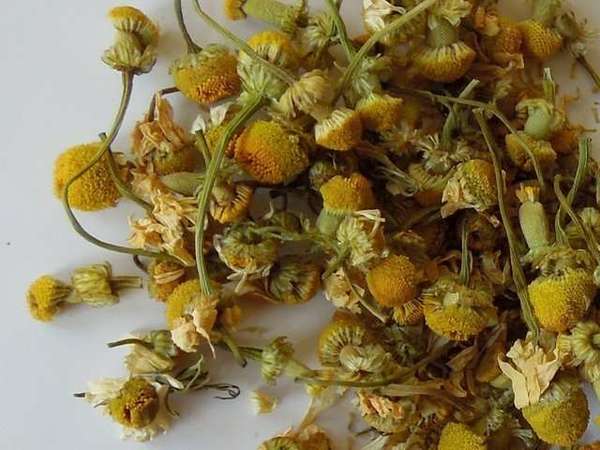 Dried chamomile flowers for use in chamomile tea.
Because chamomile is so frequently used in herbal blends, and many herbal teas containing chamomile and other ingredients are marketed as "chamomile" or "chamomile tea", the pure herb is sometimes labeled pure chamomile tea or pure camomile tea. On RateTea, this category is used exclusively for pure chamomile, containing no other ingredients. We classify any blends containing chamomile together with other herbs under chamomile blend.
The pure herb is available both from tea companies and bulk herb companies; on this site, we list both such sources for review.
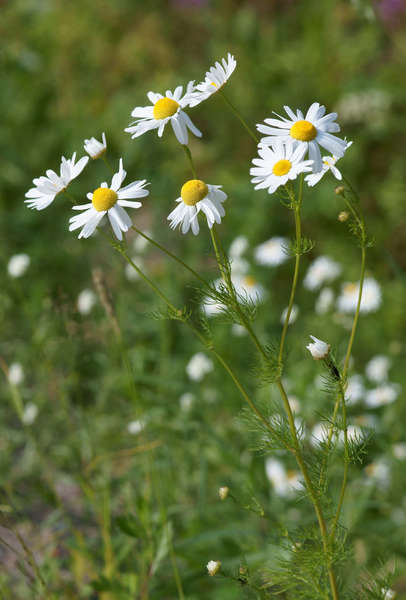 German chamomile, the species most commonly used in chamomile tea. Photo by Kallerna, licensed under CC BY-SA 3.0
Different types or species of chamomile
Chamomile is not a single species, but rather a complex of similar species in the daisy family. Matricaria chamomilla or Matricaria recutita, often called German chamomile, is a species native to Europe, and is the chamomile most commonly used in herbal teas--unless otherwise specified, when you see chamomile for sale it usually refers to this species. This plant can be cultivated in a wide range of climates, and is commercially cultivated in places as varied as Germany to Guatemala and Egypt.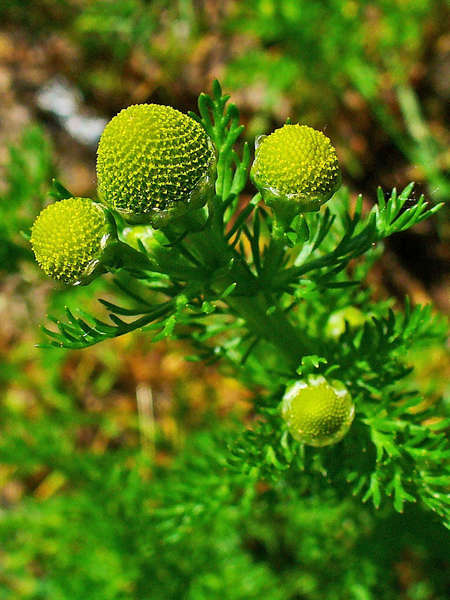 Pineapple Weed, Matricaria discoidea, Blossoms, © H. Zell, CC BY-SA 3.0.
The Matricaria genus also contains numerous other less well-known species.
Roman chamomile, Anthemis nobilis, is another similar species, less closely related, and is less commonly used in herbal teas, but has numerous traditional medicinal uses. Although it is not in the same genus, Roman chamomile looks more similar to German chamomile than some of the members of the Matricaria genus look to each other.
Health benefits and medicinal uses
Read more about chamomile and sleep.Chamomile has long been thought to have a relaxing effect. A study published in 2001 found that drinking chamomile tea was more relaxing than hot water, measured by observing heart rate, skin temperature, and other physiological indicators of relaxation.[1]
Recent scientific research points to a number of other health benefits of chamomile as well. A 2006 review of the scientific literature summarized that chamomile tea has been found to have moderate antioxidant and antimicrobial effects, and there is some evidence that it has potent anti-inflammatory activity, as well as antimutagenic, cholesterol-lowering, antispasmodic, and anti-anxiety activity.[2] Antioxidants are common among most teas and herbal teas. A 2008 study suggested that chamomile had the effect of lowering blood sugar, and could be useful for preventing or treating diabetes.[3]
Chamomile is sometimes recommended as a remedy for acid reflux or heartburn.
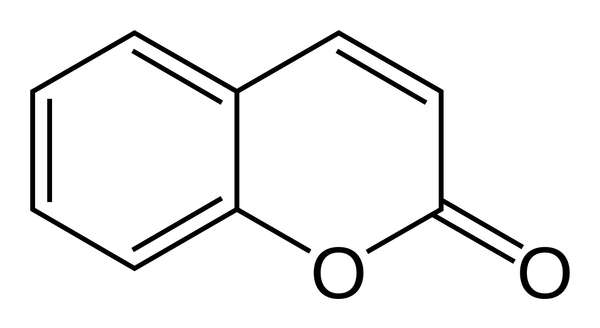 Coumarin is a compound that occurs in chamomile and is responsible for some of its health effects.
Risks, side effects, and allergic reaction
The main known side-effect of chamomile is that the herb can act as a blood thinner, and is one of many natural substances known to interact with the prescription blood-thinner Warfarin (Coumadin). Chamomile contains the chemical coumarin, which is chemically and biologically similar to Warfarin/Coumadin, and which can be dangerous when consumed in very high concentrations. However, the amounts in chamomile tea are small and safe for beverage use in normal, healthy people.While not common, there are documented cases of severe allergic reactions to Chamomile. Chamomile is in the aster/daisy family, which also contains common allergens such as ragweed and mugwort; allergies to these plants can cause cross-reactivity and produce a reaction.[4] It is thus important for those with known allergies or risk of allergies to plants in this family to exercise caution with the use of chamomile tea or any products containing chamomile.
References:
1. Moriya Kiyoshi et. al. Correlation between the indices of autonomic nervous system and mood after drinking chamomile tea. Japanese Journal of Biofeedback Research, Vol. 28, 2001.
2. Diane L. McKay, Jeffrey B. Blumberg, A Review of the bioactivity and potential health benefits of chamomile tea (Matricaria recutita L.), Phytotherapy Research, vol. 20, no. 7, pp. 519 - 530.
3. Atsushi Kato, Yuka Minoshima, Jo Yamamoto, Isao Adachi, Alison A. Watson, Robert J. Nash, Protective Effects of Dietary Chamomile Tea on Diabetic Complications, Journal of Agricultural and Food Chemistry, Vol. 56, No. 17, pp 8206-8211, Sep. 10, 2008.
4. J.Subiza, J.Subiza, M.Hinojosa, R.Garcia, M.Jerez, R.Valdivieso, E.Subiza, Anaphylactic reaction after the ingestion of chamomile tea: A study of cross-reactivity with other composite pollens, Journal of Allergy and Clinical Immunology, Vol. 84, No. 3, pp. 353-358, 1989.
↑Recent Pure Chamomile Reviews — RSS 


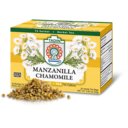
Manzanilla (Chamomile) from Tadin Herb and Tea Co.
Style: Pure Chamomile Tea – Region: ?????Apr. 14th, 2022
Value-wise, I've found that cheaper chamomile really is best much of the time, since the quality doesn't seem to vary greatly from one brand to another. So when I run low or out, I just grab something inexpensive when I see it. Such was the case here, and I rate "value" highly for two reasons:
1) The tea was on sal...

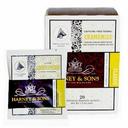
The only other reviews so far give it 90 and a 100 points, so it looks like this is a contrasting view. I found it to be both a little bitter and bland, without much floral flavor or aroma. I got a sachet of this as a freebie with another order, so they may have been giving away some out-of-date product.
Read Full Review
Let's play tea detective. This product was a bit perplexing—not because of anything having to do with its own properties, but because it took some digging to find exactly this stuff online. Lipton sells a "Relax" branded chamomile in retail—on its site and in some stores—but I don't know if this is the same stu...
Read Full Review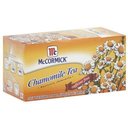
Though tagged here as retired, it seems McCormick has unretired it, for as of late October 2019, it is available in 10- or 25-count boxes on Amazon, and the web presences of big brick-and-mortar store chains like Wal-Mart, Safeway, Kroger and H-E-B. I got some in person at a regional Oklahoma chain today, for a little...
Read Full Review
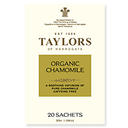
Organic Chamomile Tea Bags from Taylors of Harrogate
Style: Pure Chamomile Tea – Region: ?????Aug. 2nd, 2019
This is good quality chamomile. After opening the heavy paper and foil pouch, the dry teabag has a much richer aroma than most chamomile that I've had. The contents of the teabag looks ground up and entirely flower parts with no stems or leaves.
It brews up a deep gold with a slight greenish hue. The aroma of the li...
Read More Reviews of Pure Chamomile (52) ...
↑Top Reviewers
| Rank | User | # | % |
| 1 |  Alex Zorach Alex Zorach | 15 | 22 |
| 2 |  Tchuggin' Okie Tchuggin' Okie | 8 | 12 |
| 3 |  Linda Martin Linda Martin | 3 | 4 |
| 4 |  geologyguy geologyguy | 3 | 4 |
| 5 |  Mariko Mariko | 2 | 3 |
Review 3 teas to get on this list!
Advertisement
↑Most-Rated Pure Chamomile
Cozy Chamomile® Herbal Tea
| Brand: | Bigelow Tea |
| Style: | Pure Chamomile Tea |
| Region: | ????? |
| Caffeine: | Caffeine Free |
| Leaf: | Teabag |
Chamomile
| Brand: | Two Leaves and a Bud |
| Style: | Pure Chamomile Tea |
| Region: | Egypt |
| Caffeine: | Caffeine Free |
| Leaf: | Sachet |
Pure Camomile (Chamomile)
| Brand: | Twinings |
| Style: | Pure Chamomile Tea |
| Region: | ????? |
| Caffeine: | Caffeine Free |
| Leaf: | Teabag |
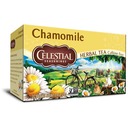
Chamomile Herbal Tea
| Brand: | Celestial Seasonings |
| Style: | Pure Chamomile Tea |
| Region: | Blend |
| Caffeine: | Caffeine Free |
| Leaf: | Teabag |
Chamomile (Sachet)
| Brand: | Harney and Sons |
| Style: | Pure Chamomile Tea |
| Region: | Egypt |
| Caffeine: | Caffeine Free |
| Leaf: | Sachet |
↑Top-Rated Pure Chamomile
Chamomile (Sachet)
| Brand: | Harney and Sons |
| Style: | Pure Chamomile Tea |
| Region: | Egypt |
| Caffeine: | Caffeine Free |
| Leaf: | Sachet |
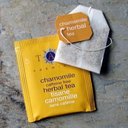
Chamomile Herbal Tea
| Brand: | Stash Tea |
| Style: | Pure Chamomile Tea |
| Region: | Egypt |
| Caffeine: | Caffeine Free |
| Leaf: | Teabag |
Pure Camomile (Chamomile)
| Brand: | Twinings |
| Style: | Pure Chamomile Tea |
| Region: | ????? |
| Caffeine: | Caffeine Free |
| Leaf: | Teabag |
Chamomile
| Brand: | Two Leaves and a Bud |
| Style: | Pure Chamomile Tea |
| Region: | Egypt |
| Caffeine: | Caffeine Free |
| Leaf: | Sachet |
Cozy Chamomile® Herbal Tea
| Brand: | Bigelow Tea |
| Style: | Pure Chamomile Tea |
| Region: | ????? |
| Caffeine: | Caffeine Free |
| Leaf: | Teabag |


