




Fair Trade Tea
Wikipedia: Fair_tradeLast Updated: Dec. 31, 2014
Browse Fair Trade Teas
RateTea allows you to browse and search fair trade, filtering them by style/variety and country/region of origin.List Brands Selling Fair Trade Tea
On RateTea, fair trade certified teas are labeled with an
 icon. In the store, look for one of the logos pictured below.
Why is there a push for fair trade?
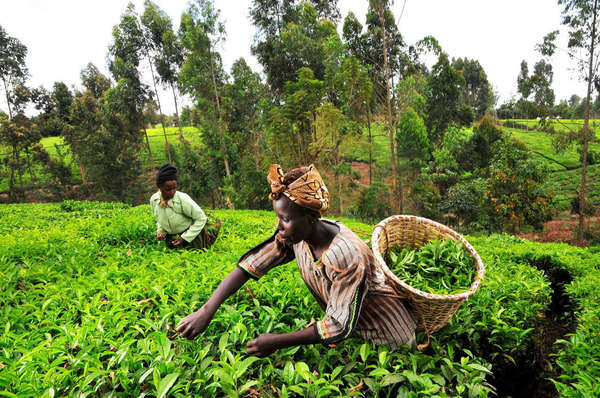 Tea Pickers in Kenya, near Mount Kenya, © Neil Palmer (CIAT), CC BY-SA 2.0.
Fair trade is one attempt to solve or at least mitigate these problems.
Fair trade certification
Because fair trade goods often fetch a higher price than similar goods, companies selling fair trade goods need to have their operations certified by a non-profit organization. Certifying organizations include Fair Trade USA (Formerly TransFair USA), and the World Fair Trade Organization. The Fairtrade Labelling Organizations International (FLO) is an association of organizations that have produced an international logo, encompassing certifications from many different orgainzations.Is fair trade tea more expensive?
Not necessarily. While some of the factors in fair trade result in a higher price for consumers, there are other factors that can contribute to a lower price. Fair trade involves direct sourcing from producers, eliminating layers of middlemen who each take their share of the profit. Fair trade can thus result in prices comparable to, and on occasion, even lower than products of similar quality.Fair trade is not an instant solution.
Although fair trade is by and large a positive movement with a positive impact on protecting human rights and working for economic justice, buying fair-trade certified tea is not an instant solution. One film, The Bitter Taste of Tea, offers a scathing criticism of the fair trade movement, claiming that it has done little to address the issues that it has set out to address, and does little more than assuaging the conscience of people buying the tea.[1]
There are other ways to advance some of the same values and goals as the fair trade movement without necessarily buying tea with the fair trade label. Purchasing tea that is sold directly from the source, or that is sourced directly and sold by a single retailer (rather than with multiple layers of middlemen) can achieve some of these goals. Some retailers undertake similar goals to fair trade without going for certification; for example, Teatulia, has used their profits to create a dairy cooperative and fund health and educational programs in the region of their tea garden in Bangladesh. Purchasing tea grown by farmer-owned cooperatives also helps achieve these goals--and many of these cooperatives do not bear the fair trade label. For example, Obubu Tea is a farmer-owned Japanese tea company, and it does not bear any fair trade label.
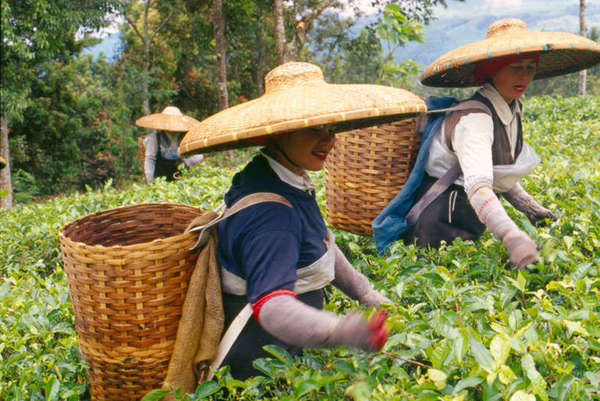 Tea Pickers in Cisarua Bogor, Indonesia, © Danumurthi Mahendra, CC BY 2.0.


