




L-Theanine and Tea
Wikipedia: L-TheanineLast Updated: Oct. 31, 2013
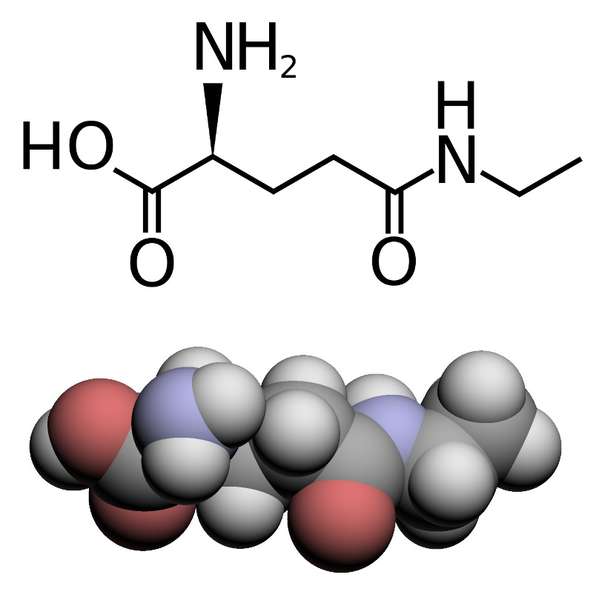 Two representations of L-theanine molecules.
Which teas have the most L-theanine?
The concentration of L-theanine in any kind of tea is high, for this relatively uncommon chemical. Two of the teas with the highest known concentration, gyokuro and Anji bai cha, contain around 2% L-theanine by dry weight. Most other teas are closer to 1% by dry weight.L-theanine has a savory or umami taste
L-theanine, being chemically similar to glutamic acid, imparts a distinct flavor to foods: it activates the same taste receptors as glutamate (MSG), and thus has a savory or umami flavor. Its high concentration in teas such as gyokuro and Anji bai cha imparts a noticable savory quality to these teas.Effects of L-theanine on mind and body: alertness from caffeine, and relaxation
L-theanine has a number of effects on mind and body. Its effects are not fully understood, and are a subject of ongoing research.L-theanine interacts with caffeine, promoting increased alertness with smaller doses of caffeine; this effect has long been suggested, and has been confirmed by a controlled study.[1] This may explain why tea is so popular for boosting concentration, even though it contains so much less caffeine than coffee. L-theanine also seems to play a role in relaxation. The interaction with caffeine combined with the relaxing effects has led people to claim that L-theanine promotes a relaxed alertness. L-theanine may also promote healthy sleep, and may be one of the reasons that tea seems to play a positive role in sleep, in spite of its caffeine content.[2]
There is also evidence from studies on mice that L-theanine can protect the liver against damage caused by alcohol.[3]
Other names of L-theanine:
L-theanine is often just called theanine. The L is rather superfluous: R-theanine is not a biologically important molecule (all of the essential amino acids are of the left-handed form). L-theanine has many synonyms, including gamma-glutamylethylamide and 5-N-ethyl-glutamine, but these names are not commonly used.References:
1. Crystal F. Haskell et. al., The effects of l-theanine, caffeine and their combination on cognition and mood
, Biological Psychology, Vol. 77, No. 2, (Feb. 2008), pp. 113-122.
2. Russ Mason, 200 mg of Zen: L-Theanine Boosts Alpha Waves, Promotes Alert Relaxation, Alternative and Complementary Therapies, Vol. 7, No. 2, pp. 91-95, Apr. 2001.
3. Effects of Theanine on Alcohol Metabolism and Hepatic Toxicity, Biological & Pharmaceutical Bulletin, Vol. 28, No. 9 (2005).
Further Reading:
Theanine on WebMD - Medical information on the use of theanine as a supplement.
L-Theanine on Sloane-Kettering - A review of the scientific literature surrounding L-theanine.


