




Gyokuro
Wikipedia: Gyokuro | Teaviews: gyokuro-teaLast Updated: Mar. 14, 2014
↑About Gyokuro
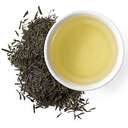
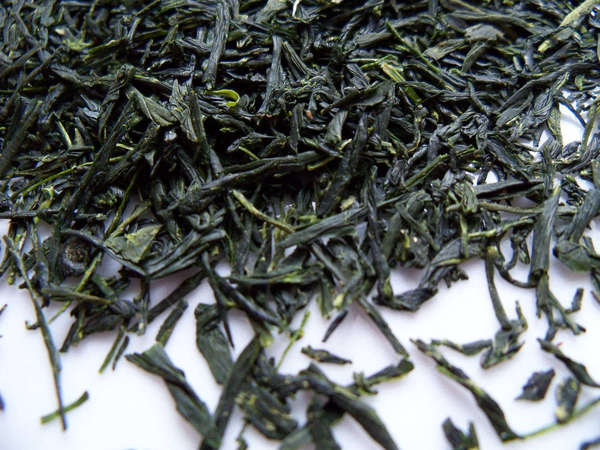 Gyokuro Imperial Green Tea from Teavana, Photo © A Girl With Tea, CC BY 2.0.
Gyokuro is made from particular varieties of the tea plant, and is shade-grown for a few weeks before picking, leading the leaves to be rich in chlorophyll. The term "shade-grown" in this context can be misleading for people familiar with shade-grown coffee. Unlike shade-grown coffees, which are grown under a mature forest canopy (and thus promote greater biodiversity than sun-grown coffees), gyokuro is grown in sun for most of its development, and is artificially shaded by covering the plants with canvas or another material. The shading of gyokuro thus affects the quality of the tea, but provides no additional ecological value.
The process used to produce gyokuro is similar to the process used to produce matcha, a powdered green tea used in the Japanese tea ceremony. The two processes are identical until after the harvesting of the leaves, so matcha and gyokuro share certain similarities of flavor and aroma, and both share the intense green color, even though they are very different in texture and method of preparation.
Most tea companies and tea drinkers recommend brewing gyokuro with a lower temperature of water than other green teas, usually 140-160°F or 60-71°C. Brewing gyokuro with higher temperature water can result in the presence of unpleasant qualities in the aroma.
References:
1. Chi-Tang Ho, Jen-Kun Lin, Fereidoon Shahidi, Tea and tea products: chemistry and health-promoting properties, Volume 8 of Nutraceutical science and technology Food science and technology, CRC Press, 2008.
↑Recent Gyokuro Reviews — RSS 


Looks and smells like a proper gyokuro but completely misses on flavor. Very hard to steep, needs a low temp and short time to avoid turning it into an astringent bitter mess. Does not re-steep at all, one and done. Some of the vegetal taste of a gyokuro but like an artificial version, not balanced or rich.
Read Full Review
I'd really like to say something positive about this tea, but it's really just not good. I gave it several chances. I brewed it first using the method that worked reliably with the Maeda-en gyokuro, but it was bitter and made me extremely jittery. I tried converting the annoying, proprietary "perfect spoonful" measurem...
Read Full Review
This and the Maeda-en Gyokuro Grower's Select go hand-in-hand. This is the sweet one of the two while the Select is more savory/umami. Both brew well very consistently (which is great, considering that gyokuro is an expensive tea and not something you'd want to waste).
I had good results with the following brewing m...
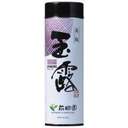
This and the Maeda-en Gyokuro Grower's Reserve go hand-in-hand, because one is more savory and the other is more sweet. One of my favorite things about both of these is that they brew well very consistently (which is great, considering that gyokuro is an expensive tea and not something you'd want to waste).
I had go...

Very vegetal, high caffeine/theanine concentration, good to wake-up or get focused and concentrate. One of my favorite!
Read Full ReviewRead More Reviews of Gyokuro (19) ...
↑Top Reviewers
| Rank | User | # | % |
| 1 |  Alex Zorach Alex Zorach | 4 | 13 |
| 2 |  Whiskey Whiskey | 3 | 10 |
| 3 |  Brytta Sóþword Brytta Sóþword | 2 | 7 |
| 4 |  Mariko Mariko | 1 | 3 |
| 5 |  Amanda Amanda | 1 | 3 |
Review 2 teas to get on this list!
Advertisement
↑Most-Rated Gyokuro
Gyokuro Imperial Green Tea
| Brand: | Teavana |
| Style: | Gyokuro |
| Region: | Japan |
| Caffeine: | Caffeinated |
| Leaf: | Loose |
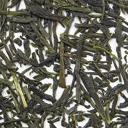
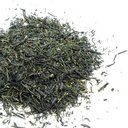
Organic Gyokuro Yamashiro
| Brand: | DAVIDsTEA |
| Style: | Gyokuro |
| Region: | Kagoshima, Japan |
| Caffeine: | Caffeinated |
| Leaf: | Loose |
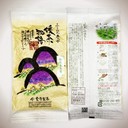
Heritage Gyokuro
| Brand: | Kurihara Tea |
| Style: | Gyokuro |
| Region: | Fukuoka, Japan |
| Caffeine: | Caffeinated |
| Leaf: | Loose |
↑Top-Rated Gyokuro
Gyokuro Imperial Green Tea
| Brand: | Teavana |
| Style: | Gyokuro |
| Region: | Japan |
| Caffeine: | Caffeinated |
| Leaf: | Loose |


