




Mint Tea
Wikipedia: Peppermint_tea | Teaviews: mint-teaLast Updated: Feb. 2, 2016
↑About Mint Tea
Mint tea is one of the most popular and widely consumed types of herbal tea. It is used as tea on its own, in herbal tea blends, or mixed with green or black teas.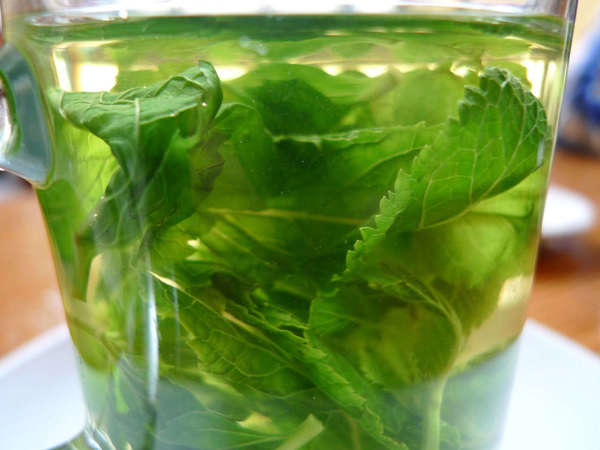
Mint is not a single species of plant, but rather, a diverse plant family, Lamiaceae or Labiatae, that contains many plants called by the name of "mint" as well as many culinary herbs, medicinal plants, and a broad variety of other plants, including many plants important in herbal teas, such as lemon balm and wild bergamot. Most true mints (and plants with the characteristic "minty" aroma) belong to the metha genus, but a few plants in other genera also have minty aroma and bear the name "mint" as well.
Commercially available mint teas are almost exclusively either peppermint or spearmint, but there are numerous other mint varieties that are widely cultivated and sold in garden centers. Some other types of mint used in tea by home gardeners include apple mint or wooly mint, and peppermint cultivars like orange mint or chocolate mint.
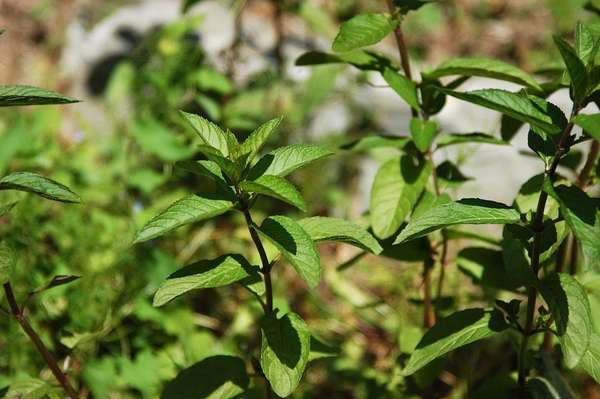 Peppermint, pictured here, is a hybrid of two species: spearmint and water mint. Photo © Simon Eugster, CC BY-SA 3.0.
Apple mint, also called woolly mint or fuzzy mint, is particularly important in tea culture, as it is traditionally used for blending with green tea in Morocco.
Mint tea can be made out of fresh or dried leaves. It is typically brewed with boiling water. The amount of leaf used typically varies by the species. Peppermint can have an overwhelmingly strong aroma, requiring less leaf to be used, whereas spearmint and other mints require more leaf. Mint teas make particularly good iced teas, as mint is often described as having a cool or refreshing quality.
Heath effects
Many mints have numerous health benefits. Spearmint has significant antioxidant properties which have been shown to aid in the preservation of meat.[1] Mint tea has also been shown to enhance iron absorption.[2] Peppermint, spearmint, and Japanese mint have been shown to inhibit and kill a number of strains of harmful bacteria, including antibiotic-resistant strains such as MSRA.[3] Spearmint has also been shown to inhibit the growth of a variety of harmful fungi.[4]While most mints are generally safe for consumption in food or beverages, some species of mint are toxic in large doses. Pennyroyal (Mentha pulegium), which has a pleasant minty aroma and makes a delicious tea, can cause liver damage and can even be lethal in a high enough dose, and is an ongoing source of poisoning.[5]
References:
1. Sweetie R. Kanatt et. al., Antioxidant potential of mint (Mentha spicata L.) in radiation-processed lamb meat, Food Chemistry, Vol. 100, No. 2, 2007, pp. 451-458.
2. F. Zaida et. al., Iron Availability and Consumption of Tea, Vervain and Mint during Weaning in Morocco, Annals of Nutrition & Metabolism, Vol. 50, No. 3, 2006.
3. H. Imai et. al., Inhibition by the essential oils of peppermint and spearmint of the growth of pathogenic bacteria., Microbios., Vol. 106, Suppl. 1, 2001, pp. 31-9.
4. K. M. Soliman, R. I. Badeaa, Effect of oil extracted from some medicinal plants on different mycotoxigenic fungi, Food and Chemical Toxicology, Vol. 40, No. 11, Nov. 2002, pp. 1669-1675.
5. Ilene B. Anderson et. al., Pennyroyal Toxicity: Measurement of Toxic Metabolite Levels in Two Cases and Review of the Literature, Annals of Internal Medicine, Vol. 124, No. 8, Apr. 15, 1996, pp. 726-734.
↑Recent Mint Reviews — RSS 


Peppermint Tea Bags from Murchie's Tea & Coffee Ltd
Style: Peppermint Tea – Region: United States of AmericaJan. 25th, 2024
As much Murchie's tea as I've ordered, chugged and rated, and as strongly as I love peppermint, this was only a matter of time. Usually, I get a quick box of somebody's peppermint tea (usually Celestial Seasonings, which I've rated highly) at a retail store and go with that. However, lately amid price inflation of al...
Read Full Review
My first in-person conference this decade yielded a few new teas to try and to rate. This was one. As always with such "freebies", value is based on the online and/or local store price.
This is a tea I would call "socially awkward" if it were a human. It hides quietly in the corner when you expect a meaningful i...

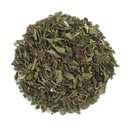
Bulk Spearmint Leaf, Cut & Sifted, Organic from Frontier
Style: Spearmint Tea – Region: ?????Feb. 27th, 2022
I love spearmint herbal tea, but it's usually only available as a blend with peppermint. The only pure spearmint that I've been able to find locally in tea bags is Traditional Medicinals and they've been out of stock at the store where I buy them. I normally don't buy bulk because it's often stale, but since I was orde...
Read Full Review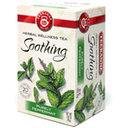
The version I have simply is called "Peppermint" without the "Purely" or "Soothing" parts, though I have seen the white-box "Soothing" version in stores too. The ingredient in both simply is peppermint leaves. I don't know if it has been wholly renamed, or if this is just a relabeling of the same tea for different ma...
Read Full Review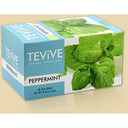
It's not hard to get peppermint tea right: just use properly grown and dried leaves and put enough in the bag to fill it when wet. They got the first part, and failed miserably on the second.
I've had a lot of peppermint teas, and the quality of the leaves they use stands with any of them, even with a few choppe...
Read More Reviews of Mint (87) ...
↑Top Reviewers
| Rank | User | # | % |
| 1 |  Tchuggin' Okie Tchuggin' Okie | 19 | 25 |
| 2 |  Alex Zorach Alex Zorach | 14 | 19 |
| 3 |  Difflugia Difflugia | 6 | 8 |
| 4 |  Brytta Sóþword Brytta Sóþword | 5 | 7 |
| 5 |  geologyguy geologyguy | 4 | 5 |
Review 5 teas to get on this list!
Advertisement
↑Most-Rated Mint
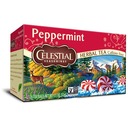
Peppermint Herbal Tea
| Brand: | Celestial Seasonings |
| Style: | Peppermint Tea |
| Region: | United States of America |
| Caffeine: | Caffeine Free |
| Leaf: | Teabag |
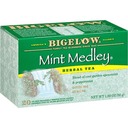
Mint Medley® Herbal Tea
| Brand: | Bigelow Tea |
| Style: | Mint Tea |
| Region: | ????? |
| Caffeine: | Caffeine Free |
| Leaf: | Teabag |
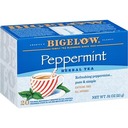
Peppermint Herbal Tea
| Brand: | Bigelow Tea |
| Style: | Peppermint Tea |
| Region: | ????? |
| Caffeine: | Caffeine Free |
| Leaf: | Teabag |
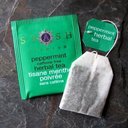
Peppermint Herbal Tea
| Brand: | Stash Tea |
| Style: | Peppermint Tea |
| Region: | United States of America |
| Caffeine: | Caffeine Free |
| Leaf: | Teabag |
Refresh Mint Filterbag
| Brand: | Tazo Tea |
| Style: | Mint Tea |
| Region: | ????? |
| Caffeine: | Caffeine Free |
| Leaf: | Teabag |
↑Top-Rated Mint
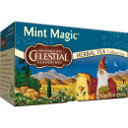
Mint Magic Herbal Tea
| Brand: | Celestial Seasonings |
| Style: | Mint Tea |
| Region: | ????? |
| Caffeine: | Caffeine Free |
| Leaf: | Teabag |
Peppermint Herbal Tea
| Brand: | Celestial Seasonings |
| Style: | Peppermint Tea |
| Region: | United States of America |
| Caffeine: | Caffeine Free |
| Leaf: | Teabag |
Peppermint Herbal Tea
| Brand: | Bigelow Tea |
| Style: | Peppermint Tea |
| Region: | ????? |
| Caffeine: | Caffeine Free |
| Leaf: | Teabag |
Mint Medley® Herbal Tea
| Brand: | Bigelow Tea |
| Style: | Mint Tea |
| Region: | ????? |
| Caffeine: | Caffeine Free |
| Leaf: | Teabag |
Refresh Mint Filterbag
| Brand: | Tazo Tea |
| Style: | Mint Tea |
| Region: | ????? |
| Caffeine: | Caffeine Free |
| Leaf: | Teabag |


